
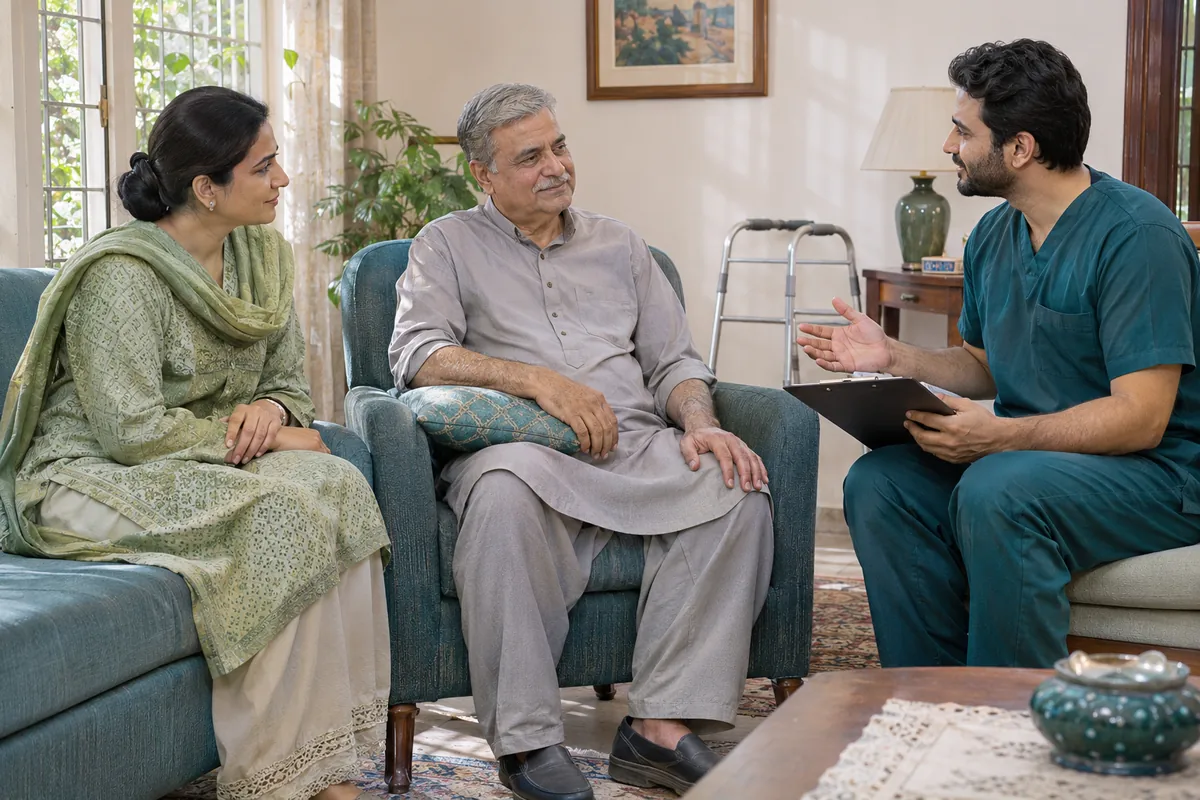
After a stroke, returning home can bring a new set of questions: how to get out of bed, use a weak arm, walk safely and manage everyday care.
The first days may be filled with scans, medicines and hospital decisions. Once discharge approaches, the focus expands to movement, independence and support at home. Stroke physio is an important part of that recovery, alongside the wider stroke rehabilitation team.
This guide explains physiotherapy after stroke, the exercises a therapist may consider, home rehabilitation and cost questions. If you are arranging stroke physiotherapy in Karachi, use it to prepare for an individual assessment.
01 / Understand the purpose
What is stroke physiotherapy, and how does it help?
A stroke can damage brain areas involved in movement. One-sided weakness is called hemiparesis; paralysis on one side is called hemiplegia. Balance, sensation, coordination and walking may also be affected.
Physiotherapy aims to improve movement and everyday function. It can help a person practise tasks such as rolling in bed, standing from a chair, reaching or walking, while learning ways to manage continuing difficulties.
Recovery involves neuroplasticity, the brain’s ability to adapt and reorganise connections. Repeated, meaningful practice is part of this process. The level of effort and support should match the person’s abilities, health and fatigue; doing more is not automatically better. [2]
“Move safely from bed to chair” or “hold a spoon more comfortably” gives the rehabilitation team something useful to work towards and review.
02 / Start safely, keep reviewing
When should physiotherapy start after a stroke?
Rehabilitation should begin as soon as the stroke team considers it safe. This may start in hospital with assessment, positioning and suitable movement. The plan depends on medical stability, the effects of the stroke and any precautions; there is no single start day that suits everyone.
Early rehabilitation does not mean rushing someone into demanding exercise. NICE advises against high-intensity mobilisation in the first 24 hours for people who need help to sit out of bed, stand or walk. The treating medical team should guide the timing and progression. [3]
Is it too late after three or six months?
No. Progress is often fastest in the early months, but improvement can continue well beyond six months, sometimes for years. If recovery has slowed or care has been interrupted, ask for a reassessment rather than assuming there is nothing more to work on. Outcomes vary, and full recovery cannot be promised. [4]
03 / Practise everyday movement
Stroke physiotherapy exercises and techniques
Every stroke is different. A physiotherapist assesses movement, balance, sensation, pain and the help needed before selecting exercises. The examples below describe rehabilitation goals; they are not a routine to copy without assessment.
Balance & walking
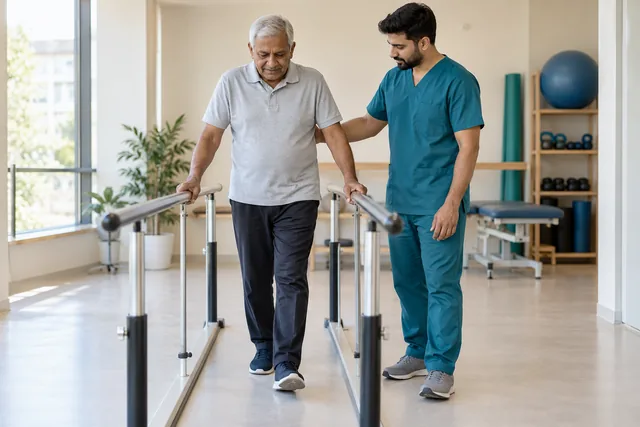
Gait training after stroke
Practice may progress from sitting and standing balance to weight shifts, stepping and walking with suitable support. A walking aid or ankle-foot orthosis for foot drop should be selected, fitted and reviewed individually. [5]
Arm & hand use
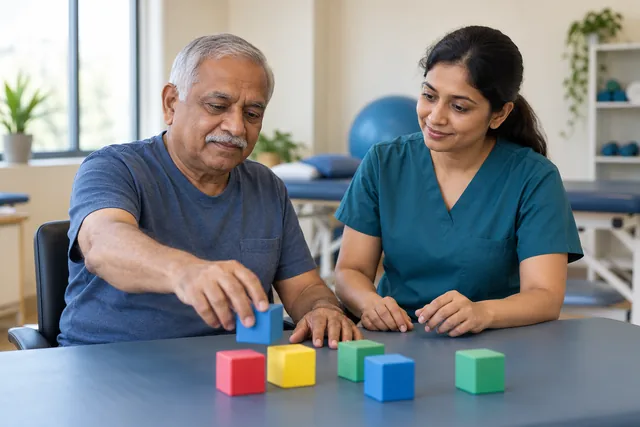
Reaching, grasping & daily tasks
Hand exercises after stroke may involve reaching for objects, grasping and releasing, or working towards using cutlery. Mirror therapy or constraint-induced movement therapy may suit selected patients after assessment; they are not right for everyone. [6]
These rehabilitation scenes are AI-generated illustrations, not RDPC patients, outcomes or instructions for unsupervised exercise.
Bed mobility and transfers
Rolling, moving towards the edge of the bed and transferring from bed to chair can be early goals. For someone mostly in bed, the team may begin with supported positioning and appropriate movement. Ask for hands-on guidance before helping with transfers.
Sit-to-stand practice
Getting up from a chair is a useful functional goal. Your therapist should decide the chair height, amount of assistance and progression. Do not attempt unsupported standing if balance or leg control is unsafe. [5]
Spasticity and comfortable movement
Some people develop increased muscle tightness after stroke. Positioning, movement and an individual management plan may help. Persistent stiffness, pain or difficulty with hygiene needs assessment; forceful stretching is not a substitute for that care. [6]
Protecting the shoulder
A weak arm needs careful handling. Shoulder pain can have several causes, including changes in joint support, muscle tone or injury. Ask how to position and support the arm, and never pull on it to help someone stand or move. [7]
04 / Choose a workable setting
Home stroke physiotherapy or clinic rehabilitation?
Both can have a place. The choice depends on safety, travel, equipment needs, family support and the goals agreed with the rehabilitation team.
Care in familiar surroundings
Home physiotherapy
Home stroke rehabilitation can be practical when travel is difficult. It allows the therapist to consider the actual bed, chair, bathroom access and space the person uses every day.
- Practise relevant tasks in the home environment.
- Include the family in the visit.
- Discuss safe assistance and suitable equipment.
Care in a clinical setting
Clinic-based rehabilitation
A clinic may provide more space and equipment for selected tasks. It can become a useful option when travel is manageable and the setting supports the person’s goals.
- Discuss the equipment your plan requires.
- Plan travel and fatigue around the appointment.
- Arrange referrals when other disciplines are needed.
A combination may be appropriate. Whatever the setting, ask for a written home exercise programme, a demonstration and a clear review date. Family members should help only with the activities and level of assistance they have been shown.
RDPC accepts home physiotherapy enquiries in Karachi. Contact the team to confirm clinical suitability, current coverage, therapist availability and travel charges.
05 / Support between appointments
How families can support stroke recovery at home
Family support matters, but a caregiver should not have to guess how to help. Ask the rehabilitation team to demonstrate safe support, check your understanding and adapt the plan to what is manageable at home.
- Use the agreed programme.Ask which movements to practise, how much help is needed and when to stop or call for advice. A written plan is easier to follow consistently.
- Balance activity with rest.Post-stroke fatigue can be significant. Tell the team when it affects participation so the timing, pace and activities can be adjusted.
- Make everyday movement safer.Ask about transfers, footwear, walking aids and obstacles in the home. Do not pull on the weak arm or leave someone to practise standing alone if they need supervision.
- Notice and report changes.Share new pain, falls, increasing stiffness, mood changes or difficulties following the programme. New stroke symptoms require emergency assessment.
- Look after the caregiver too.Discuss lifting concerns, tiredness and the support you need. Ask for practical teaching and help with care arrangements when necessary.
Stroke rehabilitation may also involve occupational therapy for daily activities, speech and language therapy for communication or swallowing, and medical or psychological care. Keep the treating physician involved for medicines, blood pressure and prevention of another stroke. Ask about referrals instead of expecting physiotherapy alone to address every need. [8]
06 / Plan the course of care
Stroke physiotherapy cost in Pakistan
The cost depends on the assessment, setting, visit frequency and the support required. Home visits may have additional travel charges. Since stroke rehabilitation can continue over months, compare the likely course of care and review arrangements, not just one session’s price.
Call 03193403700 for assessment and follow-up charges. Ask separately about home visits, travel and any equipment costs. This guide does not quote an unverified treatment price.
Questions to ask about fees and follow-up
- What does the initial stroke assessment include?
- How often are sessions recommended, and when will progress be reviewed?
- Are home-visit and clinic-session charges different?
- Are packages available, and what are their cancellation and refund terms?
- Will the family receive a written home programme and practical guidance?
The number and duration of sessions should follow clinical needs and progress. Ask for clear goals and regular reviews rather than a guaranteed recovery date or a fixed course for every patient.
07 / Arrange your assessment
Stroke physiotherapy in DHA Karachi at RDPC
Rajput Dental & Physio Clinic is in DHA Phase II Extension, Karachi. Contact the physiotherapy team to discuss post-stroke movement difficulties, current medical advice and whether a clinic or home assessment is appropriate.

Head of Physiotherapy
Your RDPC physiotherapy team
Discuss recovery goals with Dr. Laheem Hassan.
Dr. Laheem Hassan leads RDPC’s physiotherapy department. The assessment can help identify movement priorities, the assistance needed and practical next steps for rehabilitation.
Bring the hospital discharge summary, medicine list, relevant reports and any existing therapy plan. Mention mobility difficulties when booking so the team can discuss suitable arrangements.
Read Dr. Laheem’s profileFind the clinic
DHA Phase II Extension
Shop 60E, 21st Commercial Street Extension,near Blue Ribbon Bakery,
DHA Phase II Extension,
Karachi 75500, Pakistan. Get directions
Open 7 Days
2 PM–9 PM
Monday to Sunday. Confirm your physiotherapist’s appointment time before travelling.
Call 03193403700For a home visit, ask the clinic to confirm coverage, timing and the applicable fee.
08 / Your questions, answered
FAQs about stroke recovery and physiotherapy
How long does stroke recovery take?
It varies widely. Progress is often faster in the early months, but improvements may continue for months or years. The effects of the stroke, overall health, goals and response to rehabilitation all influence the course of recovery.
Can a stroke patient recover fully?
Some people regain most or all of their previous abilities; others have lasting difficulties and need ongoing support or adaptations. An individual assessment and repeated reviews help the team discuss realistic goals. No programme can guarantee full recovery.
How many physiotherapy sessions are needed after a stroke?
There is no fixed number. The team should recommend a schedule based on medical needs, functional goals, fatigue and progress, including suitable practice between appointments. Ask when the programme will be reviewed and adjusted.
Can stroke physiotherapy be done at home?
Yes, when home rehabilitation is suitable and the required support is available. A therapist should assess the person and environment, explain safe assistance and provide a plan. Ask RDPC about current home-visit coverage and charges in Karachi.
Which exercises are best for stroke patients?
The best exercises address the person’s assessed difficulties and goals. These may include bed mobility, transfers, supported balance, walking or arm and hand tasks. Do not use a general online routine as a substitute for an individual plan.
Is fatigue normal after a stroke?
Fatigue is common and can affect rehabilitation. Discuss it with the treating team so possible contributors can be assessed and the programme adjusted. New or worsening symptoms should not automatically be dismissed as ordinary tiredness.
Can rehabilitation still help after six months?
Yes. Some people continue to improve long after the early recovery period. A reassessment can identify new goals, suitable practice or adaptations. Progress and the level of support needed differ from person to person.
What else supports recovery besides physiotherapy?
Medical follow-up, prescribed medicines, management of stroke risk factors, emotional support and other rehabilitation disciplines may all be needed. Ask the treating team about occupational therapy, speech and swallowing assessment, and support for mood or cognition when relevant.
Start with an individual assessment
A practical plan for the next step.
Ask our DHA Karachi team about stroke rehabilitation, clinic appointments and home physiotherapy availability.
Sources & further reading
This general guide explains rehabilitation options. The treating stroke team should set the timing, precautions and exercise programme for the individual. International guidance is cited for clinical information; local service arrangements differ.
- NHS: Symptoms of a stroke
- American Stroke Association: Life After Stroke guide
- NICE NG128: Early mobilisation after acute stroke
- American Stroke Association: Recovery and rehabilitation
- Canadian Stroke Best Practices: Balance, mobility and gait rehabilitation
- NICE NG236: Stroke rehabilitation in adults
- Canadian Stroke Best Practices: Shoulder protection after stroke
- NHS: Stroke recovery and support for carers
Join the conversation
Questions & comments
Comments are public. For appointments or personal medical information, contact the clinic directly.